

[비즈한국] I visit Gangneung often. Living at the eastern edge of Seoul, it’s easy to travel to Gangwon Province, and since it’s my mother’s hometown, I have a deep sense of connection to it. I have so much affection for Gangneung that I even seriously considered moving there when I moved house last year. Moreover, reasons to go to Gangneung keep popping up.
Splendid art galleries open, new shops that stimulate the urge to shop increase, favorite authors open bookstores, and, above all, there’s so much delicious food. It’s not for nothing that it boasts the dignity of a tourist city with 35 million annual visitors.
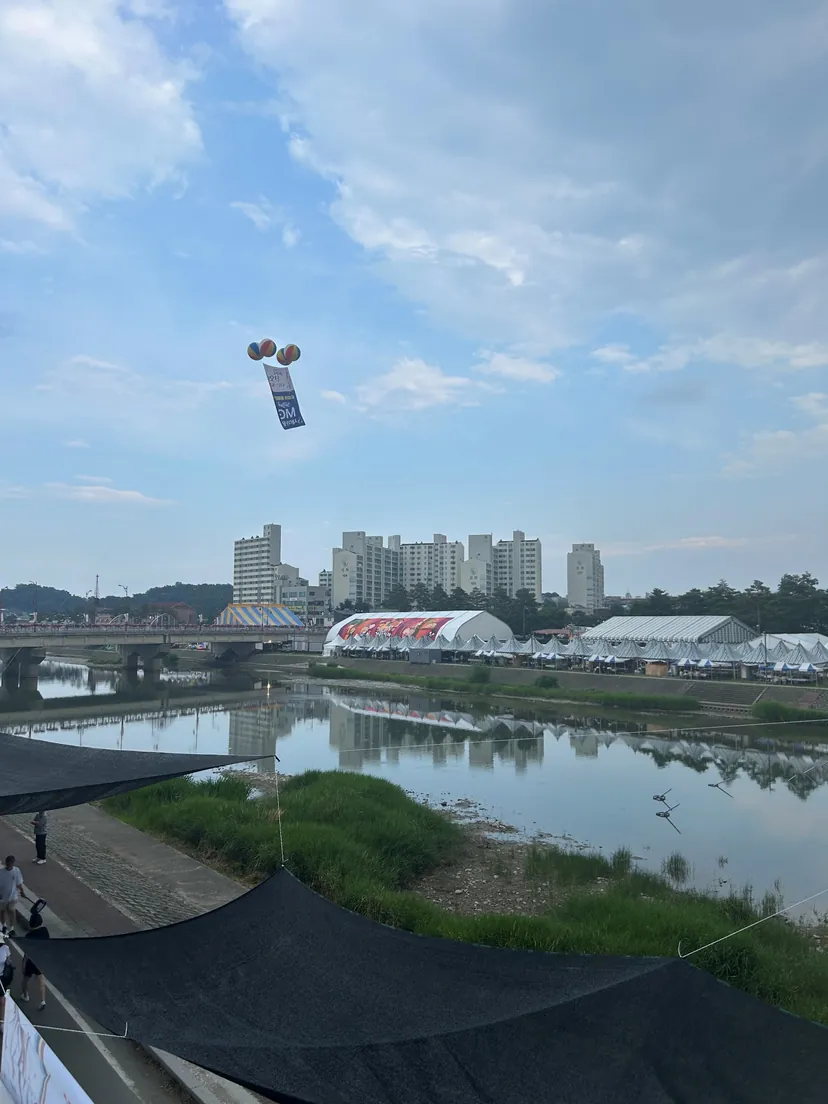
My reason for visiting Gangneung this time was simple: the Gangneung Danoje Festival, which took place from June 15th to 22nd. The Gangneung Danoje Festival is famous enough to be counted as a UNESCO Intangible Cultural Heritage of Humanity and one of Korea’s representative traditional festivals. Of course, when I suggested going to Gangneung to see the festival, I was teased with "What, are you going to wash your hair with calamus water?", but I managed to persuade a friend to head to Gangneung with me.
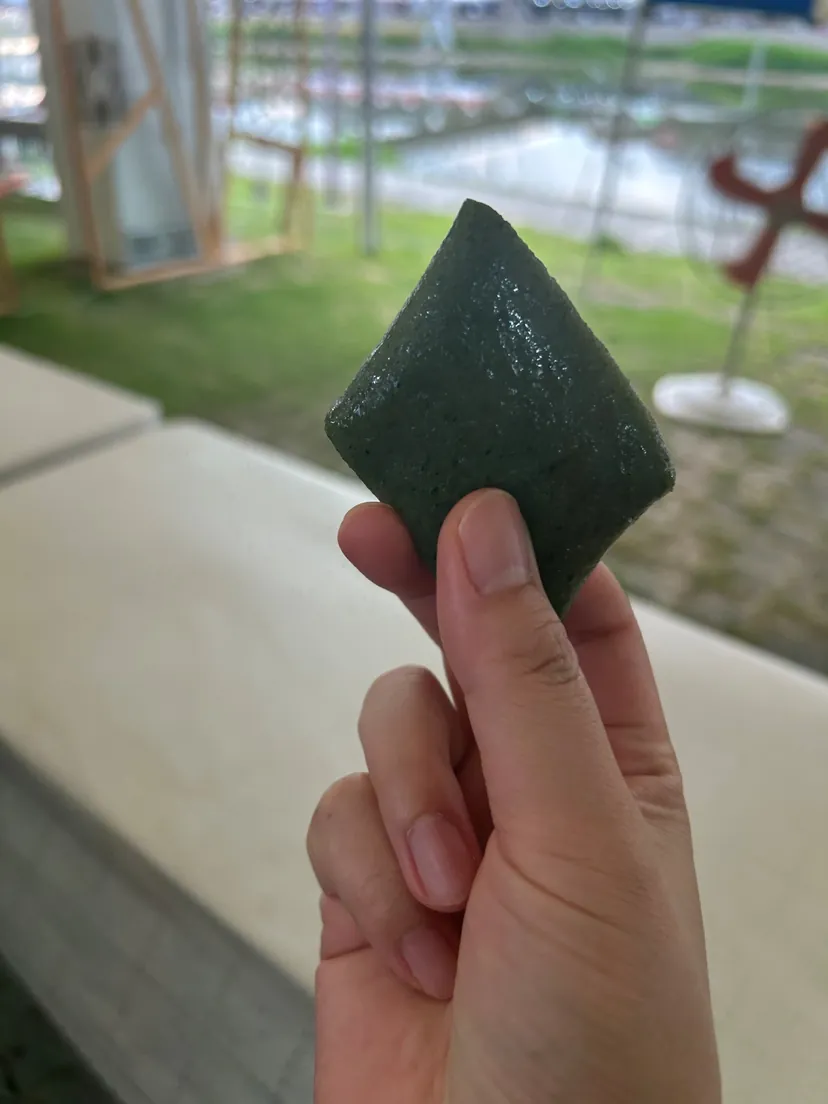
First, I visited the event site at Namdaecheon and tasted *sinju* (ritual liquor) and *surichwi-tteok* (edible thistle rice cakes) at the "Dano Experience Village." The *sinju* and rice cakes, made from rice carefully collected by Gangneung citizens, were available for anyone to try for free. Volunteers were nimbly handing out cakes to the crowds of people waiting in line, and if you moved to another queue, they would give you *sinju* along with a few pieces of shrimp crackers. Their dexterity was so heartwarming.
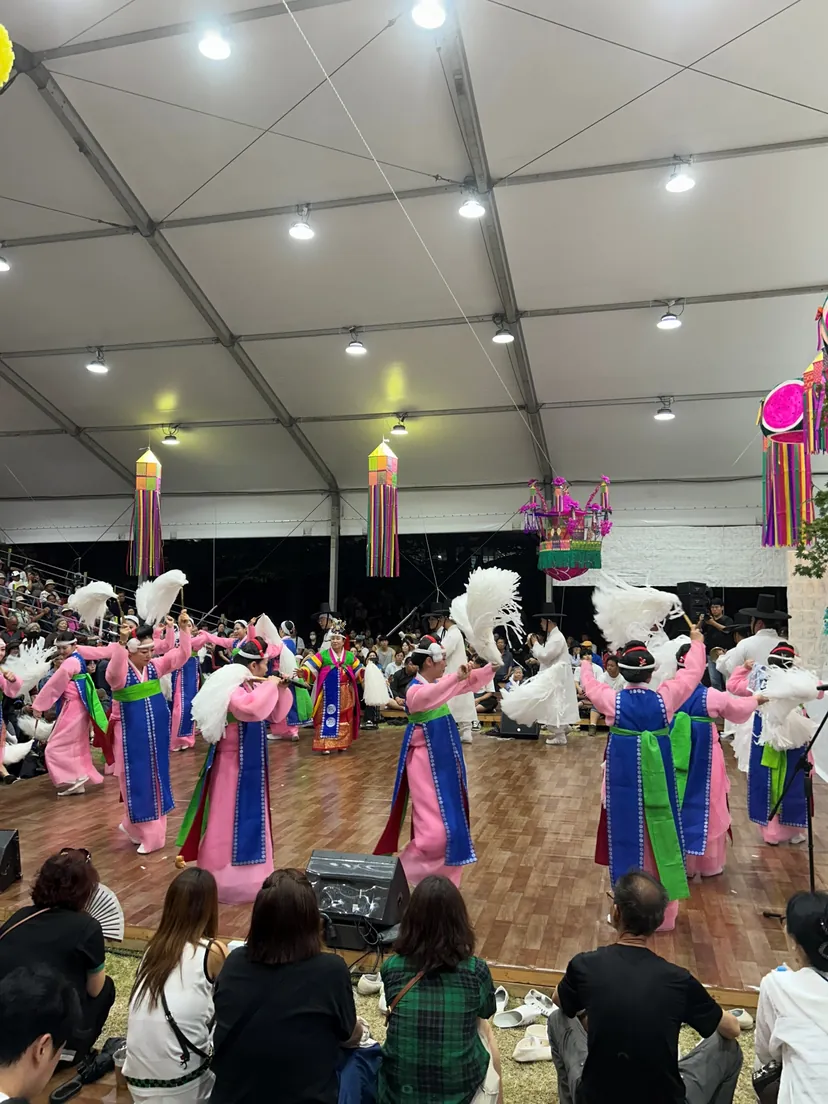
The *Dano-gut* (shamanic rituals) held at the Dano altar were also unmissable. The rituals conducted that day included the *Mun-gut* (gate ritual), which welcomes the gods by opening the heavenly gates in all directions, and the *Cheongjwa-gut*, where the invited gods are seated at the altar. With Bin Sun-ae, a master of *Dano-gut*, presiding over the ritual, the spectacle of shamans and male musicians dancing in pairs to the accompaniment of *taepyeongso* (oboe) and *kkwaenggwari* (gong) was truly mesmerizing.
It was fun to become part of the crowd, as the ritual grew more intense with the prayers of people wishing for a year free of misfortune and for everything to go smoothly. I heard that 1.1 million people visited the Gangneung Danoje Festival this year, and it was a place where you could truly feel that energy.
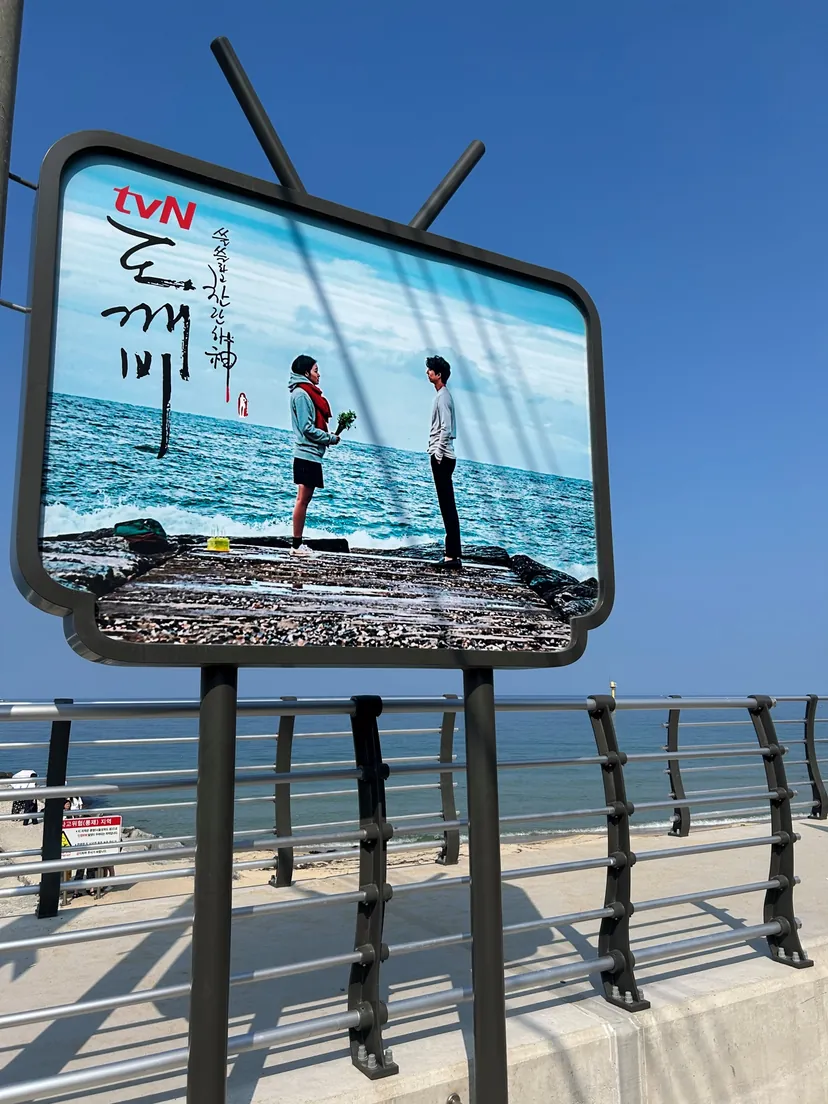
Since I was in Gangneung, visiting the sea was a matter of courtesy. Each of Gangneung’s beaches has its own unique vibe, and the reason I headed to Jumunjin without hesitation was also simple: I heard news that a travel variety show commemorating the 10th anniversary of the drama "Guardian: The Lonely and Great God" (Goblin) was being filmed.
The four main characters—Gong Yoo, Kim Go-eun, Lee Dong-wook, and Yoo In-na—visited the Jumunjin Breakwater, which has become such a landmark that it's marked on Google Maps. Sure enough, even 10 years later, I witnessed people queuing up to take commemorative photos, unable to let go of the lingering impact of "Goblin." However, if you don’t strictly need a photo, a wise choice might be to enjoy some "sea-gazing" (badameong) at a nearby cafe, such as the "Sundubu Gelato 3rd Branch," where you can view the open sea and the breakwater through floor-to-ceiling windows.
Of course, there are plenty of other great beaches in Gangneung besides Jumunjin. If you are a BTS fan, you would definitely want to take a photo at the "BTS Bus Stop" at Hyangho Beach, which is just over 4km away from the Jumunjin Breakwater by car. Sageunjin Beach, famous for its colorful tetrapods, is also a popular spot for young people these days.
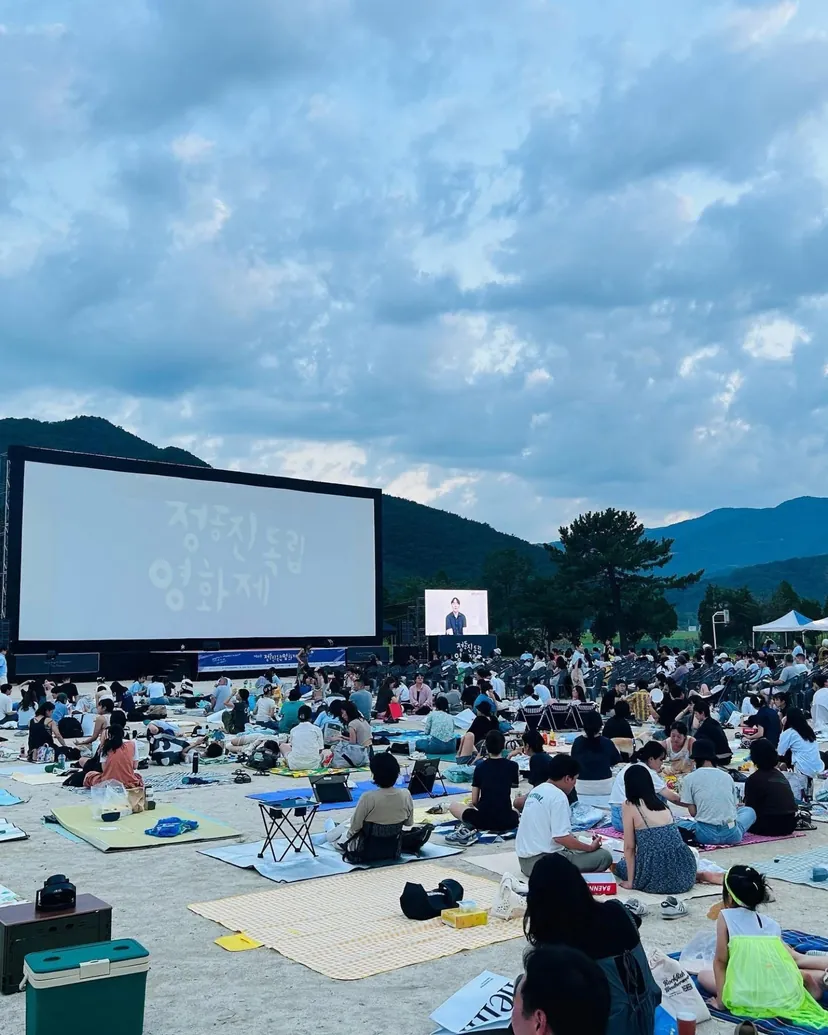
One cannot leave out the quiet, sentimental Deungmyeong Beach located in the southern part of Gangneung, and Jeongdongjin, still famous for the drama "Sandglass." In particular, if you are planning to visit Gangneung around August 7–9, I recommend Jeongdongjin, where the 28th Jeongdongjin Independent Film Festival will be held! As a three-time attendee, I guarantee that watching independent films late into the night while smelling mosquito coils on the Jeongdong Elementary School playground will become an intense memory. During the day, be sure to stop by "East Cine," a film bookstore in Jeongdongjin.
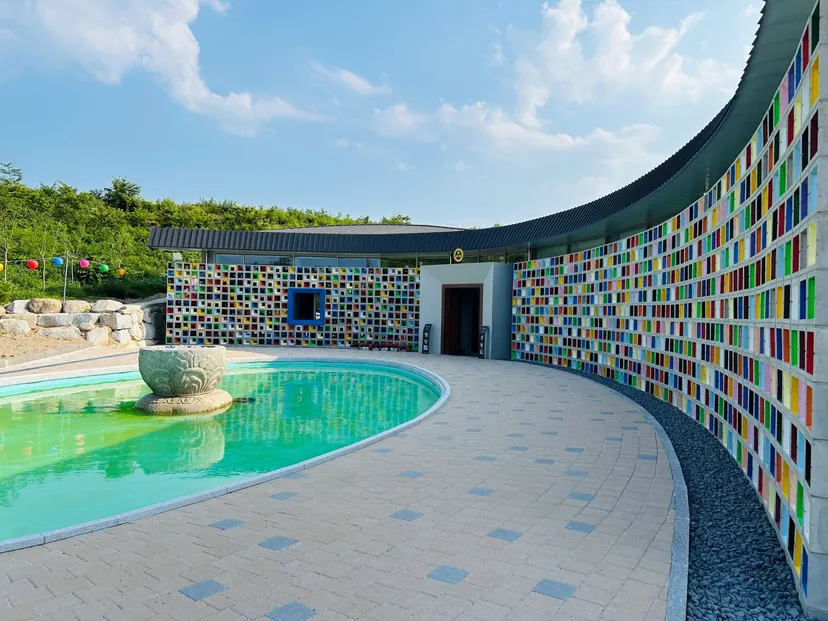
If you are looking for unique aesthetics and meditation beyond the sea, there is Inwolsa Temple near Gyeongpo Lake. It was completely destroyed by the Gangneung forest fire in 2023 but was rebuilt as a modern building. After winning a World Architecture Award last March, it has become a famous temple that frequently appears on SNS like Instagram. With its exterior featuring colorful walls (Indra Wall) and a small pond reminiscent of a lake, you might even mistake it for an art gallery rather than a temple. The highlight is the meditation room inside the main hall.
You can stay for a few minutes or up to 30 minutes for some quiet meditation. Meditation isn't particularly difficult; you can follow the guide on Vipassana meditation techniques or simply sit quietly with your eyes closed and focus on your breathing to find peace. Oh, and they sell handmade coffee *sikhye* (sweet rice drink) and peony *sikhye* at the temple; you must try the coffee *sikhye* at least once.
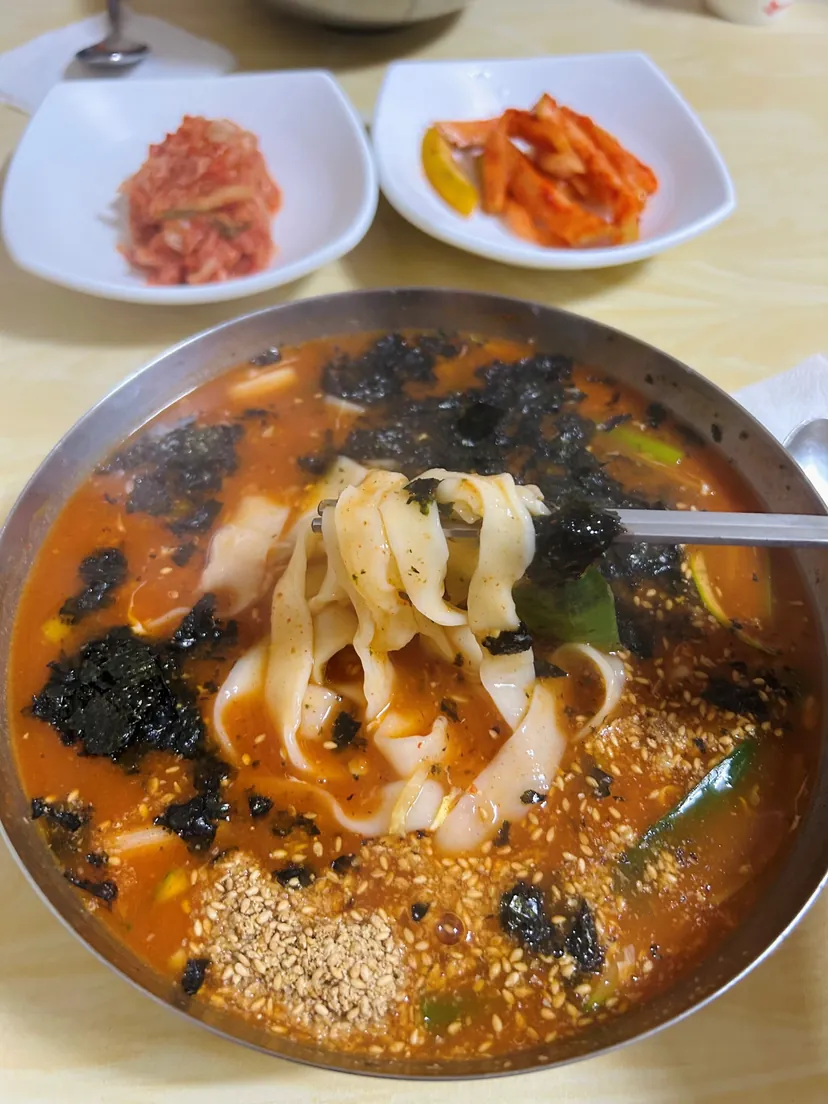
The joy of gastronomy is also an essential element of a Gangneung trip. Starting with the *jang-kalguksu* (spicy noodle soup) at Hyeongje Kalguksu, the crispy and chewy "cup long potatoes" from Gangneung-gil Gamja, the *nurungji* (scorched rice) squid sundae at Gangneung Jungang Market which is perfect as a snack with drinks, the famous breads of Gangneung—including the Danish toast from Gyodong Bakery that sells out by the afternoon—and the beer and pizza from Budnamu Brewery, Gangneung’s representative craft brewery and restaurant.
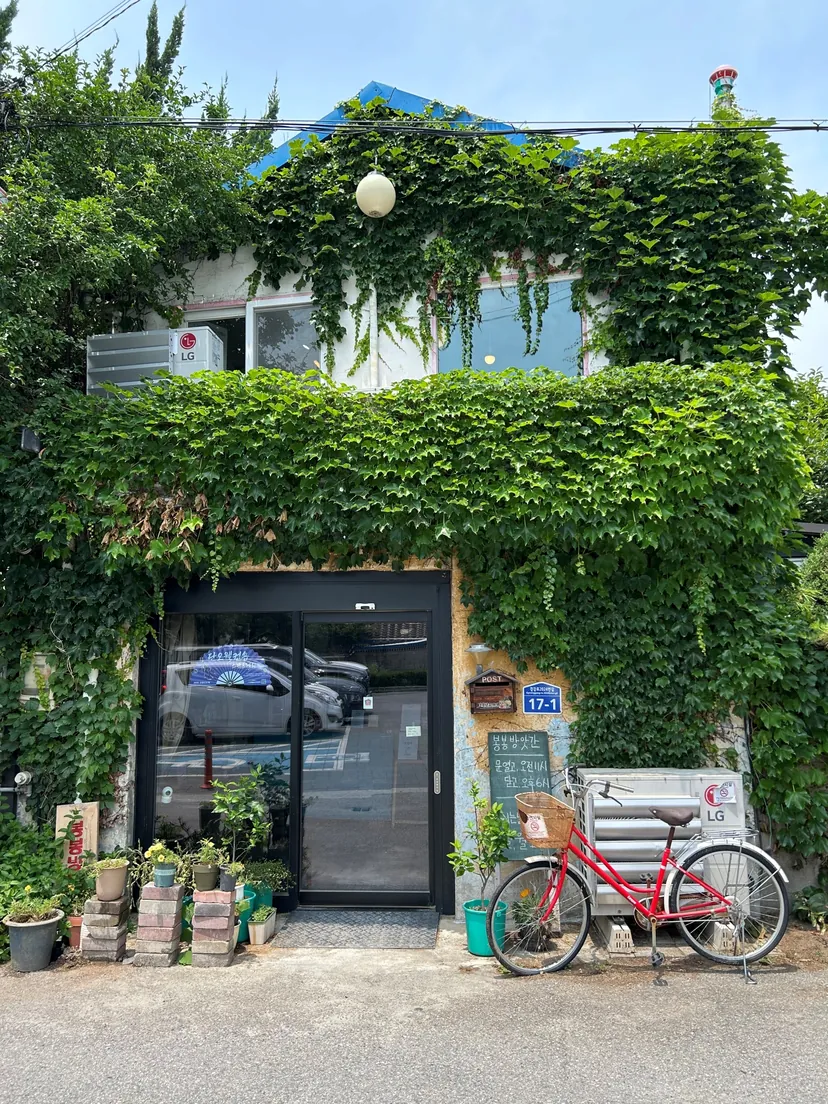
If you want to enjoy coffee in Gangneung, known as the city of coffee, there are many options like the Cafe Street at Anmok Beach, Terarosa, or Bohemian Park Yi-choo Coffee, but I personally recommend Myeongju-dong, which was the old downtown of Gangneung. There is great pleasure in walking slowly through the alleys filled with charming cafes such as Bongbong Bangatgan—which appeared as a filming location for director Hong Sang-soo’s film "On the Beach at Night Alone"—along with Myeongju Baeryong, Geuneuljip Gangneung, O-wol Coffee, and Cafe Onyuwol.
In the summer, you can sit on the bench at the "Blue Gate House," famous for its trumpet creepers right next to Bongbong Bangatgan, to take a photo, or enjoy the crape myrtles in full bloom in front of Myeongju Baeryong; the atmosphere is truly unparalleled.
![[Have You Been There?] Let Your Fandom Delight Your Ears at 'Audeum'](https://s.bizhankook.com/attachments/2026/07/0213677cba05_3085135b.jpg)
![[Have You Been There?] Joyful Laughter Amidst a Dry Reality! 'Fernando Botero: The Aesthetics of Form'](https://s.bizhankook.com/attachments/2026/07/2cf805024d8b_a292260c.jpg)
![[Have you been there?] Go to 'Muju', a place even Park Bo-gum has fallen in love with, right now.](https://s.bizhankook.com/attachments_thumb/2026/06/106475_thumb_243baea0.webp)
![[Have You Been There?] The Reason We Still Head to Gangneung](https://s.bizhankook.com/attachments_webp_no_wm/2026/07/134469_no_wm_2744cc66.webp)
![[Have You Been There?] Neither Monsoons Nor Heatwaves Can Stop It: The Allure of ‘Graphic’](https://s.bizhankook.com/attachments_webp_no_wm/2026/07/134672_no_wm_1367899f.webp)
![[Have You Been There?] A ‘Yangpyeong Outing’ for Both Museum Vacations and Summer Health Boosts](https://s.bizhankook.com/attachments_webp_no_wm/2026/07/134800_no_wm_95d9cafa.webp)