

[비즈한국] Samsung Electronics continued its record-breaking streak in the second quarter, fueled by the expanding demand for artificial intelligence (AI) memory.
According to the preliminary earnings report for the second quarter of this year released by Samsung Electronics on the 7th, revenue reached 171 trillion won and operating profit hit 89.4 trillion won, marking increases of 27.74% and 56.21%, respectively, compared to the previous quarter. Compared to the same period last year, revenue surged by 129.31% and operating profit skyrocketed by 1,810.26%. This is the first time a domestic company has seen single-quarter operating profit approach the 90 trillion won mark.
Adding the previously announced first-quarter results (revenue of 133.87 trillion won, operating profit of 57.23 trillion won), the cumulative first-half performance reached 304.87 trillion won in revenue and 146.63 trillion won in operating profit. This is also the first time that operating profit has exceeded 100 trillion won on a half-year basis. If securities market projections, which estimate an annual operating profit of around 374 trillion won, prove accurate, Samsung Electronics is set to generate an additional 227 trillion won in operating profit in the second half of the year alone.
This performance surpasses the most recent quarterly operating profit (Feb–April 2026) of Nvidia, the world’s largest company by market capitalization, which stood at $53.536 billion (approximately 82 trillion won). It also exceeds the most recent quarterly operating profits of Alphabet ($39.696 billion), Microsoft ($38.398 billion), and Apple ($35.885 billion). However, some experts note that direct comparisons have limitations due to differences in fiscal year standards and the timing of exchange rate applications among companies.
These preliminary results already reflect the funding for special performance bonuses agreed upon by labor and management last May as provisions. Industry insiders estimate the size of the related provisions to be around 15 to 20 trillion won, leading some analysts to suggest that if these were excluded, actual operating profit would have surpassed 100 trillion won.
The primary driver of these results is the memory business. It is estimated that approximately 88 trillion won, or over 98% of the total operating profit, came from the Memory Business Division. As AI infrastructure investments expand, the average selling price (ASP) has risen significantly not only for high-bandwidth memory (HBM) but also for general-purpose DRAM and NAND flash. According to market research firm TrendForce, the contract price for general-purpose DRAM in the second quarter is estimated to have risen by 58–63% compared to the previous quarter, and a further 13–18% increase is expected in the third quarter.
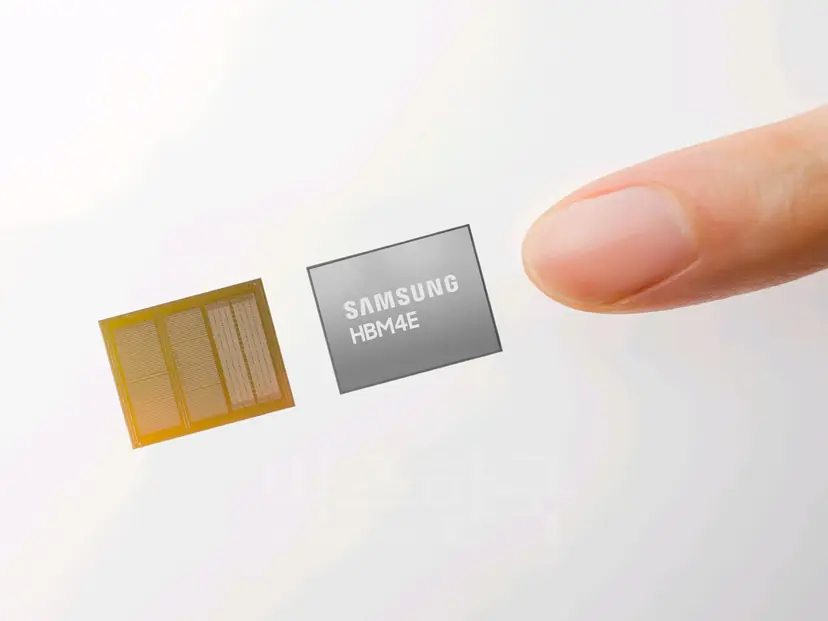
The 6th-generation HBM4, which began mass production and shipment for the first time in the world last February, supported demand by recording $1 billion (approximately 1.5 trillion won) in revenue within just four months. It is also reported that the proportion of long-term supply agreements (LTA), which reduce the risk of price volatility, is expected to expand further from the 30% level seen in the second quarter to the third quarter.
Signs of a rebound are also appearing in the foundry business, which had been suffering from long-term losses. According to industry sources, Samsung Electronics' foundry division is reported to have recorded a monthly surplus in June. This is the first monthly profit since 2023, attributed to the expansion of HBM base die production and improved yields in the 4nm process. While it is possible that the division did not break even for the entire second quarter, the possibility of a quarterly profit turnaround in the third quarter is being raised if this trend continues.
Conversely, the Device eXperience (DX) division, which handles finished products, reportedly showed relatively sluggish performance due to cost burdens resulting from rising memory prices and the slowing effect of new product launches.
Following the earnings announcement, the stock price showed somewhat mixed movements. Samsung Electronics' stock closed at 318,000 won the previous day, but had fallen to 297,750 won as of 10 a.m. on the 7th.
In the securities market, there are forecasts that the rise in memory prices in the third quarter could exceed current estimates. Kim Rok-ho, an analyst at Hana Securities, diagnosed, “Apple’s price hikes and Meta’s concerns about monetization are bound to connect to worries about increasing burdens on client companies,” but added, “It is difficult for the price-increase trend caused by supply shortages to be easily broken.”
The possibility of implementing the largest shareholder return policy in history is also being mentioned. Ryu Hyeong-geun, an analyst at Daishin Securities, analyzed, “Policy direction is expected to become clearer after the third-quarter earnings announcement, when the cash flow for the current year will be finalized,” adding, “It is an environment where both Samsung Electronics and SK Hynix can afford shareholder returns of around 100 trillion won.”
These preliminary results are figures estimated in accordance with the International Financial Reporting Standards (IFRS) as adopted in Korea, and were disclosed for the convenience of investors while the closing of accounts is still in progress.