

[비즈한국] Single-stock leveraged ETFs and ETNs tracking Samsung Electronics and SK Hynix have become a hot topic in the brokerage industry, finding themselves at a crossroads between survival and abolition just two months after launch. Although introduced rapidly following President Lee Jae-myung’s directive that ‘leveraged products are necessary,’ they have recently faced a barrage of criticism for exacerbating volatility in the domestic stock market and pouring fuel on the fire during a downturn. Financial authorities are now considering measures to overhaul the entire system.
The ‘Tail’ Wagging the Dog
Financial authorities believe a consensus has formed that the distortion of market liquidity caused by single-stock leveraged products has crossed a critical threshold.
In June, the total trading value of all ETFs was 797 trillion won, with the 14 single-stock leveraged ETFs for Samsung Electronics and SK Hynix accounting for 26.6% (212 trillion won). Speculative trading is taking place on a scale that dwarfs the average daily trading value of the KOSDAQ market (in the 8 trillion won range). Productive liquidity, which should circulate soundly, has instead sharply gravitated toward a ‘massive gambling den’ of 2x semiconductor leverage and inverse products.
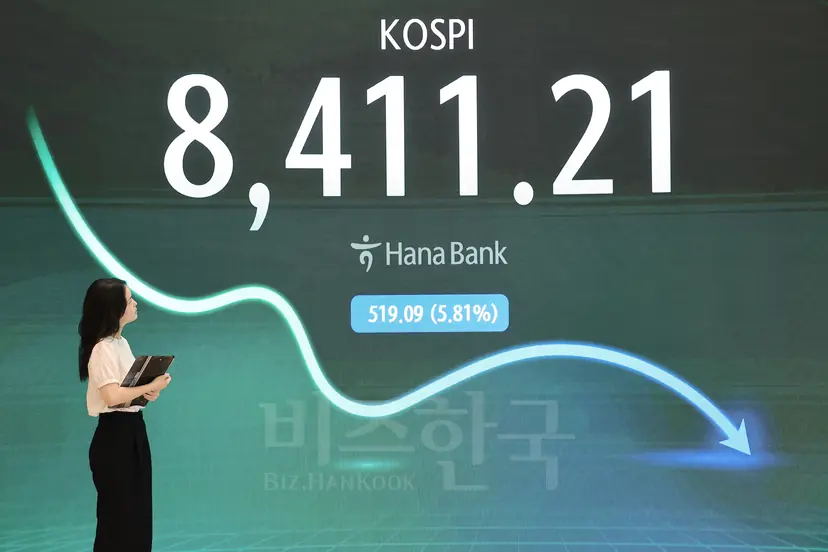
On the 8th of last month, an incident occurred with Korea Investment Management’s ‘ACE SK Hynix Single Stock Leverage.’ While SK Hynix’s stock price fell 8% that day, the ETF ended the trading session up 49.7% from the previous day. Under normal circumstances, it should have fallen by about 15–16%, twice the decline of the underlying asset, but the abnormal transaction occurred due to a flood of market buy orders during a period of price gaps at the market closing auction.
This situation shows that massive amounts of capital, which should be stabilizing the index when stock prices fall, are now ‘misleading’ the market's ups and downs due to the hedging and rebalancing mechanisms of leveraged products.
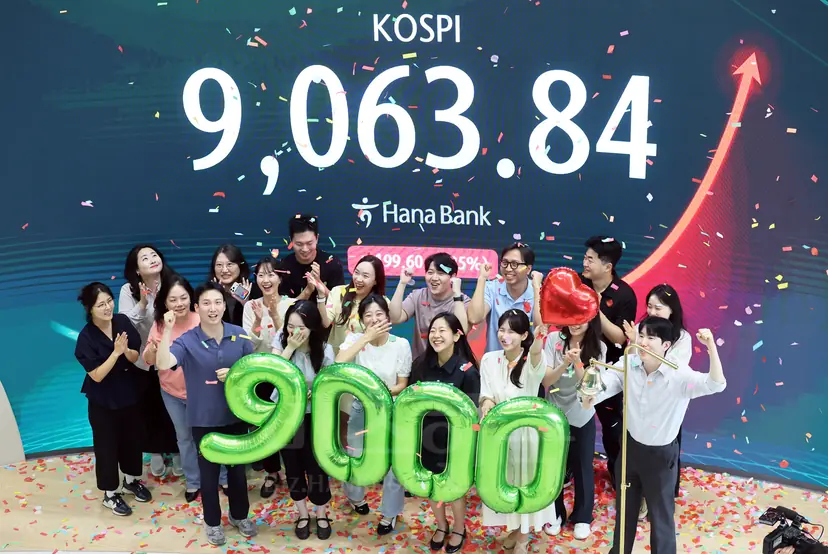
This is the exact opposite of the government’s initial policy intent. After taking office, the Lee Jae-myung administration pushed for a fast-track approach, judging that regulations on high-risk leveraged ETFs were ‘excessively strict.’ They aimed to introduce products that allow for ‘high-risk, high-multiplier’ investments, considering that capital was leaking into Samsung Electronics leveraged ETFs listed overseas, such as in Hong Kong. However, contrary to the policy intent, the risks shaking the market have only grown.
A brokerage industry insider pointed out, “These are becoming the most attractive products for day traders seeking 3–5% daily returns,” adding, “The secondary function of the stock market—capital supply to small and medium-sized enterprises—is being restricted, and it has even reached a point where it is affecting the stock prices of Samsung Electronics and SK Hynix themselves.”
Possibility of Total Abolition Discussed
Inside and outside financial authorities, the discussion has shifted from ‘phased reduction’ to the ‘possibility of total abolition’ of high-risk leveraged products. A consensus has formed that since the products were introduced too quickly based on political judgment by the government, skipping the necessary review of side effects, urgent corrective action is required.
Voices in the political sphere are also calling for urgent institutional reform, admitting a policy failure. Rep. Lee Un-ju of the Democratic Party, a member of the National Assembly’s K-Capital Market Special Committee, recently pointed out on Facebook, “We must coolly assess whether single-stock leveraged products have fostered another huge speculative tool within the domestic market,” and argued, “For the protection of individual investors and the assurance of market stability, a comprehensive re-evaluation is needed, including plans to phase out the influence of leveraged products.”
Rep. Ahn Cheol-soo of the People Power Party also criticized the situation on the 6th, stating, “The KOSPI has become a casino,” and added, “Investors’ assets are evaporating due to the ‘negative compounding effect’ characteristic of leverage. All 14 listed Samsung-Hynix leveraged products showed negative returns over the past month, with losses reaching up to 35.9%.”
Facing urgent pressure, financial authorities have decided to convene an emergency meeting of CEOs from major domestic asset management firms on the morning of the 13th, chaired by Financial Supervisory Service (FSS) Governor Lee Chan-jin. At the meeting, the authorities plan to present the necessity for countermeasures and guidelines regarding the issues caused by leveraged products.
FSS Governor Lee Chan-jin recently hinted at the preparation of countermeasures during a press conference, stating, “These were introduced to prevent the outflow of national wealth overseas, but they have had little effect and large side effects. I regret not blocking them even by lying down in protest.” The FSS is reviewing various measures to resolve the side effects of single-stock leveraged products, such as raising the base deposit requirements, and the possibility of strict measures like a complete ban on the launch and sale of new products is also being raised.
A financial authority official predicted, “Since it is judged that a ‘gambling den’ was created during the bull market, there is significant concern that risks must be minimized before the bear market sets in earnest,” adding, “Given that a consensus has formed within both the government and political circles, wouldn't government-level countermeasures for leveraged products emerge quickly?”