

[비즈한국] The paradigm of the global pharmaceutical and bio market is being reorganized around data. Vast amounts of genomic and clinical data, when combined with AI (Artificial Intelligence), are considered the key to increasing the success rate of new drug development and shortening timelines. This is why South Korea has also begun building a "data dam" involving 1 million people through the National Integrated Bio-Big Data (BIKO) project. However, within the industry, there is a mix of concern and expectation due to the lack of specific guidelines on how this data will actually be utilized in real industrial settings.
Developed countries are in a "data gold rush"… A powerful weapon for global big pharma
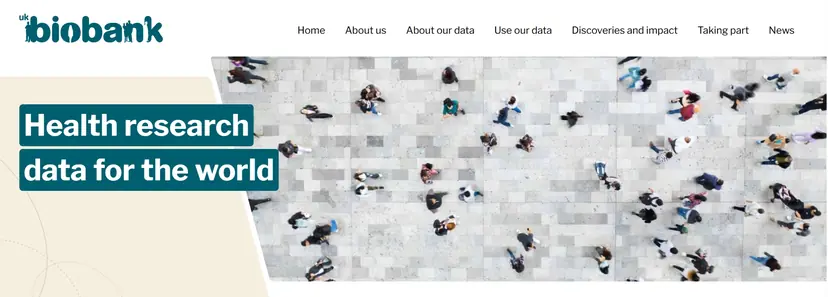
Advanced nations abroad have long since established large-scale bio-big data and are leveraging it industrially, producing tangible results. The most representative success story is the UK Biobank, launched in 2006. This project, which collected genomic and health data from approximately 500,000 people across the UK, has created a massive research ecosystem by opening the data to researchers worldwide.
In particular, the UK is thoroughly connecting this data to industrial outcomes. Four global big pharma companies—AstraZeneca, GlaxoSmithKline (GSK), Amgen, and Johnson & Johnson—jointly invested a total of 100 million pounds (approximately 170 billion KRW) into the UK Biobank’s Whole Genome Sequencing (WGS) project and directly engaged in data analysis.
Indeed, AstraZeneca analyzed the vast data from the UK Biobank using its own AI platform and discovered that a deficiency in a specific gene (IGHE) naturally protects against asthma and allergic diseases, leading to the identification of new therapeutic targets that mimic this effect.
Furthermore, targets discovered from genomic big data are being applied to actual drug pipelines, entering the clinical trial stage. After confirming that the loss of function in a specific gene called 'HSD17B13' actually lowers the risk of liver disease, AstraZeneca is developing 'AZD7503,' a targeted therapy that inhibits the expression of this gene. Currently, a global Phase 1 clinical trial is underway for patients with metabolic dysfunction-associated steatohepatitis (MASH), a refractory disease. Additionally, they have begun joint development of a next-generation anti-obesity drug by identifying a rare variant of the 'GPR75' gene, which suppresses weight gain, and targeting it.
Since 2018, the United States has also been conducting the 'All of Us' project under the leadership of the National Institutes of Health (NIH), with a goal of enrolling 1 million people. To overcome the limitations of existing genetic research, where over 90% was focused on Europeans, this project ensures data diversity by filling approximately 80% of participant slots with people of color and low-income demographics. Global pharmaceutical companies are utilizing All of Us data to cross-validate whether disease-related genes found in white-centric datasets function the same way in other ethnicities. Maze Therapeutics, a US company developing drugs for metabolic diseases like obesity, is connecting the vast All of Us dataset to its AI platform to validate drug targets and reduce failure risks.
The key competitive edge of this project is considered to be the upload of collected human-derived materials and Electronic Health Records (EHR) onto a cloud platform, making them accessible to researchers worldwide. In fact, this past February, over 10,000 researchers globally achieved the result of discovering approximately 275 million new genetic variants through this open data.
Japan is also accelerating its "Whole Genome Analysis Execution Plan," a genomic data collection project targeting 100,000 people under the leadership of the Ministry of Health, Labour and Welfare. While the UK and the US started with the general population, Japan is characterized by its focus on cancer and rare disease patients. By analyzing the genomes of refractory cancer patients whose causes could not be found through traditional hospital tests, they are identifying hidden mutations and linking them to patient-specific clinical trials. Japanese pharmaceutical companies like Daiichi Sankyo and Takeda are putting effort into discovering new targets for ADCs (Antibody-Drug Conjugates) and next-generation targeted anti-cancer drugs based on highly advanced cancer and rare disease genomic databases.
Remote analysis network established, but... "Regulatory barriers" such as the Bioethics Act remain
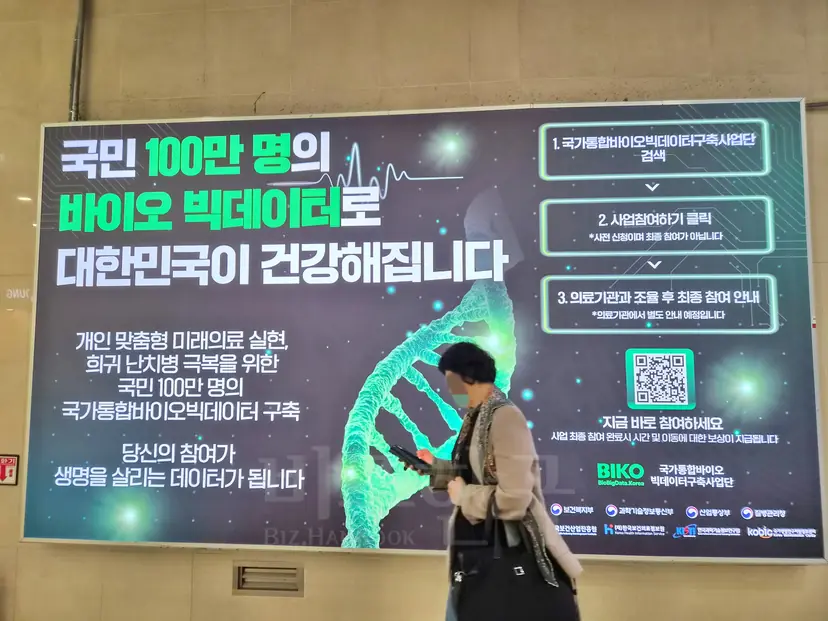
Unlike abroad, the domestic situation is just taking its first steps. The BIKO project, currently aiming to build a 1-million-person database, has recently secured data for 170,000 people. The project team plans to distribute this data to research institutes and companies upon application starting this October.
Going beyond simple data provision, the government plans to provide a remote analysis environment via Virtual Desktop Infrastructure (VDI) and free computing resources. Companies or researchers who pass the review process will be able to perform new drug development research by connecting to the system remotely from anywhere with internet access.
In the past, to analyze public data built within institutions like the Korea Disease Control and Prevention Agency's Center for Disease Control and Prevention (CODA), researchers had to physically visit the National Center for Bioresources in Osong. This project has, to some extent, resolved these accessibility issues.
However, some argue that the real barrier lies in strict domestic regulations on personal information and bioethics. Yeom Min-sun, Vice President (CTO) of Namu ICT, who serves as a member of the BIKO project steering committee, explained, "While we provide research environments and high-quality standardized data, there is a constraint that access must be through VDI only to meet the obligation of protecting sensitive data."
In particular, as vast amounts of genomic data will require massive computing power for training in the future, the inability to scale up servers accordingly is cited as a problem. Vice President Yeom pointed out, "Early in the project planning, we reviewed a hybrid method of connecting private clouds if the infrastructure built within the project team was insufficient, but it was aborted due to being blocked by the Bioethics and Safety Act and the Personal Information Protection Act," adding, "As data accumulates and demand increases, we are in a situation where we must amend related laws or secure additional budgets to expand infrastructure."

Lack of profit-sharing rules… Urgent need for a public-private partnership model to attract corporate investment
The most urgent task is to materialize profit and utilization models that can attract large-scale corporate investment. The UK’s UK Biobank received 100 million pounds in investment from four big pharma companies including AstraZeneca and granted them a 9-month exclusive priority usage right.
However, South Korea’s project was planned as a strictly state-led model, making it difficult to offer such exceptional benefits or attract massive private capital. Some point out that corporate participation was minimized from the planning stage due to concerns that it might lead to allegations of favoritism toward corporations.
At the same time, there is a vague concern that if companies succeed in commercialization using the data built by the BIKO project, they might be asked for excessive profit retrieval in the future. It is argued that the uncertainty of profit sharing is becoming a barrier that makes companies hesitant to use the data.
The UK’s UK Biobank does not demand running royalties from new drug commercialization. It only imposes tiered data access fees of up to tens of millions of won depending on company size or research nature, fully recognizing commercial results as the company’s own. The US’s All of Us also has no regulations requiring the government to reclaim a percentage of commercial profits generated from the data.
Conversely, the situation in Korea is different. There are no clearly codified guidelines on how much companies will pay for state-funded data or how much of the profit the government will share when that data is used to generate commercial revenue.
Regarding this, Vice President Yeom noted, "Since national R&D projects including BIKO are operated with taxpayer money, the ultimate benefits should return to the public," adding, "The achievements of researchers in the public domain (institutes, universities, etc.) will contribute to strengthening national R&D competitiveness in the long term, and the achievements of companies will contribute to the public through national economic development."
He continued, "While the UK received funding from companies on the premise of exclusive priority usage, we are in a situation where the government is directly building the data," and emphasized, "A fee structure for data distribution and utilization as a national R&D infrastructure requires further discussion, and positive consideration is urgently needed for measures such as carrying out public-private partnership projects by attracting investment from domestic companies in the future."